


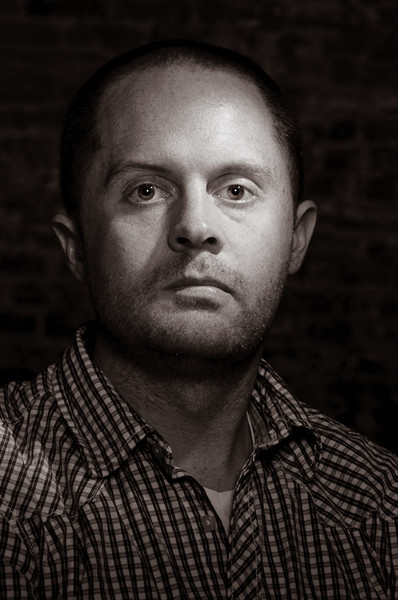
Last weekend was my third speedlight workshop with the LPMG and as the other times, it was very enjoyable. It's great to see how people are excited to learn and play with their flashguns. After explaining the theory, I invited the crowd to take their gears and practice the techniques in small groups of up to 4. Thanks to the LPMG helpers, every one receive some supports while they are shooting.

I have been giving talks around off-camera flash with speedlights techniques at the LPMG (London Photographic Meetup Group) for some times already. Off-camera lighting is a subject that interest quite a few photographers because although simple, you need to understand the basics and learn the tricks in order to make these portable flash unit your photography best friends. Some of the talks were accompanied by mini workshops where people could put into practice what was discussed. But this year, with the LPMG's organisers, we have decided to launch a series of Speedlight Workshops on their own. This is a great opportunity to get affordable tuitions on this fantastic and magical subject.
For a start we will have basics workshop to get you understand and master the essentials of off-camera flash and properties of light. There will be no secret held back!
The first workshop will be on Saturday 26th of February 2011. It will be done in two sessions (each session will have the same content, this is just to offer flexibility to the membership):
I'm looking forward to see you there, be quick as it is filling up quite fast!
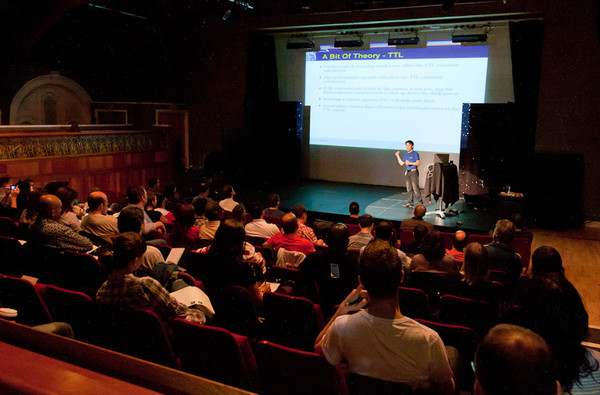
Additionally to my photography work, I'm also giving one-to-one photography courses and hold workshop and lectures to photographic societies and camera clubs in London. My most recent workshop was organised by the London Photographic Meetup Group (LPMG). It was a very fun day and we all have enjoyed it, the LPMG managed to organised the workshop at the Tabernacle near Notting Hill Gate. It's a fantastic place and very suitable for lectures but also workshop as it has both nice indoor and outdoor locations. The LPMG is a very big club with very friendly members that goes from the complete beginner to the very professional photographers in all kind of photography subjects. As a lot of members turn up at the workshop, we decided to split the group into sub-groups and have each sub-group handled by some helpers. This is where I would like to thanks my mates from the EHHPS and London Strobists group.
Thank you to you guys who answered for my call for help:
- Martin Creedy (EHHPS)
- Emil Lanos
- Dan Bachmann
- Jonathan Dawes
- Rajesh J. Taylor
I also take the opportunity to thank the previous helpers:

Thank you to all for your comments and feedbacks on both this blog and my Flickr stream, much appreciated!
In exchange, I will share with you the secrets behind these photographs. What you will find inside today's post:
- three terrific video footages of the photoshoot in Micheldever Wood. These were filmed by SnapperJack and edited with the help of Event DV.
- analysis of the shots in the wood
- analysis of the shots in the field
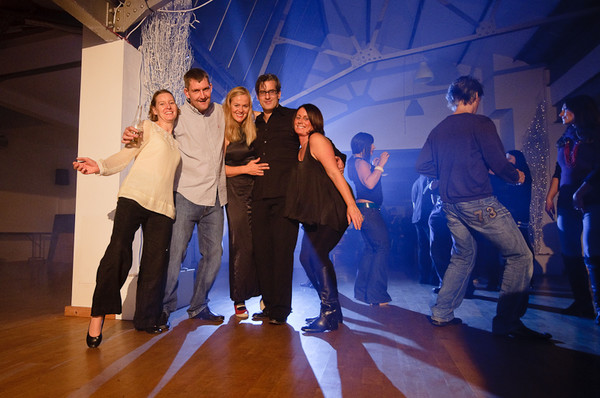
I'm sometimes asked to cover a Christmas or birthday party and was thinking I might share few tips to other photographers out there. These tips are valid for any kind of indoors party where the light level is low.
I will try to show you how to take good shots keeping the existing ambient light in the photographs and how to create your own ambient when the party venue is dull.
I will be covering mostly off-camera flash technique and how to maintain sharpness and ambient light.
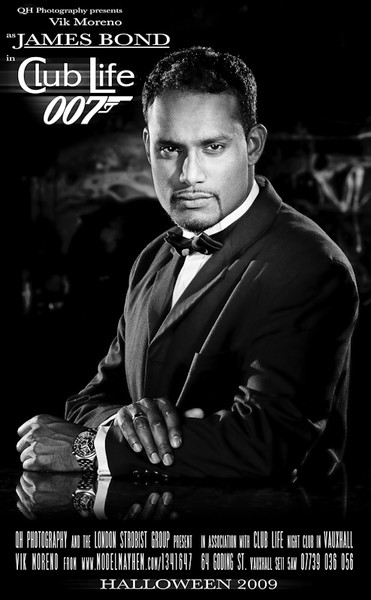
I've started a new project around espionage and have started shooting for a series on how most people would imagine a spy. Of course the most popular spy would be James Bond 007, a fictional character created in 1953 by writer Ian Fleming. James Bond was an officer of the British Secret Intelligence Service, a handsome gentleman surrounded by his bond girls! That's how probably lot of people would imagine a spy, or maybe Jason Bourne?
But this image of a spy is far from the truth, but this is another story...
Halloween 2009. The London Strobist group has organized a meetup in a night club: Club Life in Vauxhall. They gathered around 15 photographers, 9 models and 3 makeup artists. The group rented out the club for half a day and had fun testing new lighting setups and sharing knowledge. That was where I met Vik Moreno and knew he would be my perfect subject for my new project on espionage!
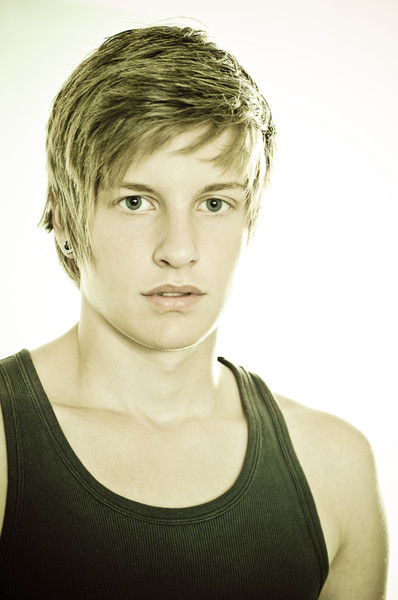
I started to use off-camera flash in my photography works back in 2007. At the time I used to photograph everything with available natural light, playing around with reflectors and finding angles that would match the ambient light. But then I started to learn using a flashgun in a proper way and became addicted to the fact that having a flashgun in your bag makes it your own available light that you can carry with you where ever you go and use it whenever you need it. But as exciting as it is when you start to get nice balanced shots, you tend to go all the way with flash only and forget the natural light. Don't forget that lighting with flash is not The way but just A way to light your image. So recently I forced myself to include natural light shots in my sessions.
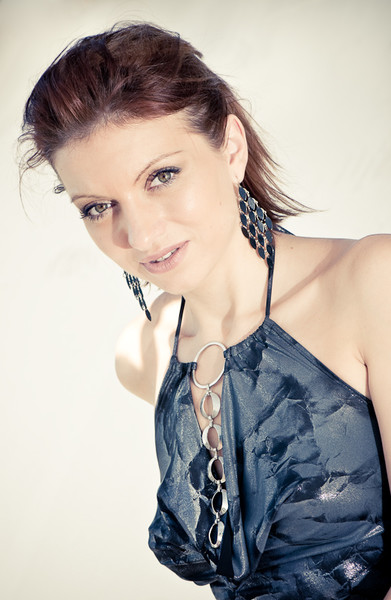
A while ago I wrote a post on how to take advantage of a cloudy day for nice portraits. Today I will talk about how to take advantage of a bright sunny day and use the sun as a second light source and get great shots even at noon.
I love location photography and prefer it to studio photography as I find it more challenging and interesting to play with all the different background available to you. The challenge is to handle the weather or difficult locations such as crowded areas. Trafalgar Square is one of them, always very busy and even worse it is a private place which means if you are shooting with a big DSLR, playing with flashguns then you will sooner or later, more sooner than later actually, meet the security guards.
Alba texted me one night at 10.30 to see if I was available for a shoot the next day. Well, I was but only at lunch time. So we sorted out a location to shoot that is easy for me to access at that time and Trafalgar Square was it.
David Hobby from Strobist.com has at last launched the 2nd season of the Boot Camp series.
For people who don't know what Strobist is, Strobist is a blog created by David Hobby in 2006. David Hobby was a photo-journalist at The Sun in Baltimore, USA. David was sharing his off-camera flash lighting techniques using small and portable flashguns instead of the heavy studio heads that photographers used to carry with them with the help of assistants. His teaching and photographic skills are such, he now have a worldwide community of fans. If you are interested to learn how to properly light your photographs, I strongly suggest you to go and read his Lighting 101 and Lighting 102.
"The Boot Camp is a series of assignments designed to help the newbs to get off their collective butt and actually go shoot something. If you are more experienced, you are more than welcome to participate. But understand that, at least at first, we'll be dialing the degree of difficulty back a little."
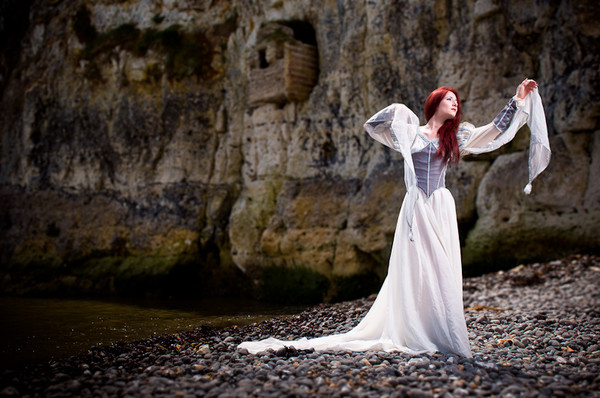
What is nice being a member of a camera club or a photographic society is that you get to meet other photographers that you can learn from or teach to which both makes you improve yourself. My first ever photographic society is the Ealing and Hampshire House Photographic Society (EHHPS), I joined the club as it was the closest to my place and just like it a lot even though I'm one youngest members. Most of photographic societies exist for a very long time and their members are members since long time ago, but it's really interesting to join as you will have different points of view and submitting your work into the local competition is always interesting.
Among photographers I've met at the EHHPS, there is Frank Williams that you already know from my photograph called "Attack of the autumn leaves". We've been mates since then and went shooting quite a few times together. Recently I've been getting in touch with Shaun Hodge another great photographer from the same club. After talking about flashguns and photoshoots he invited me to join him shooting for a dress maker friend of his. The shoot would be taking place in Dover and we would have a MUA (Make Up Artist).
 Follow me on Twitter
 Find me on Flickr
View comments (1)